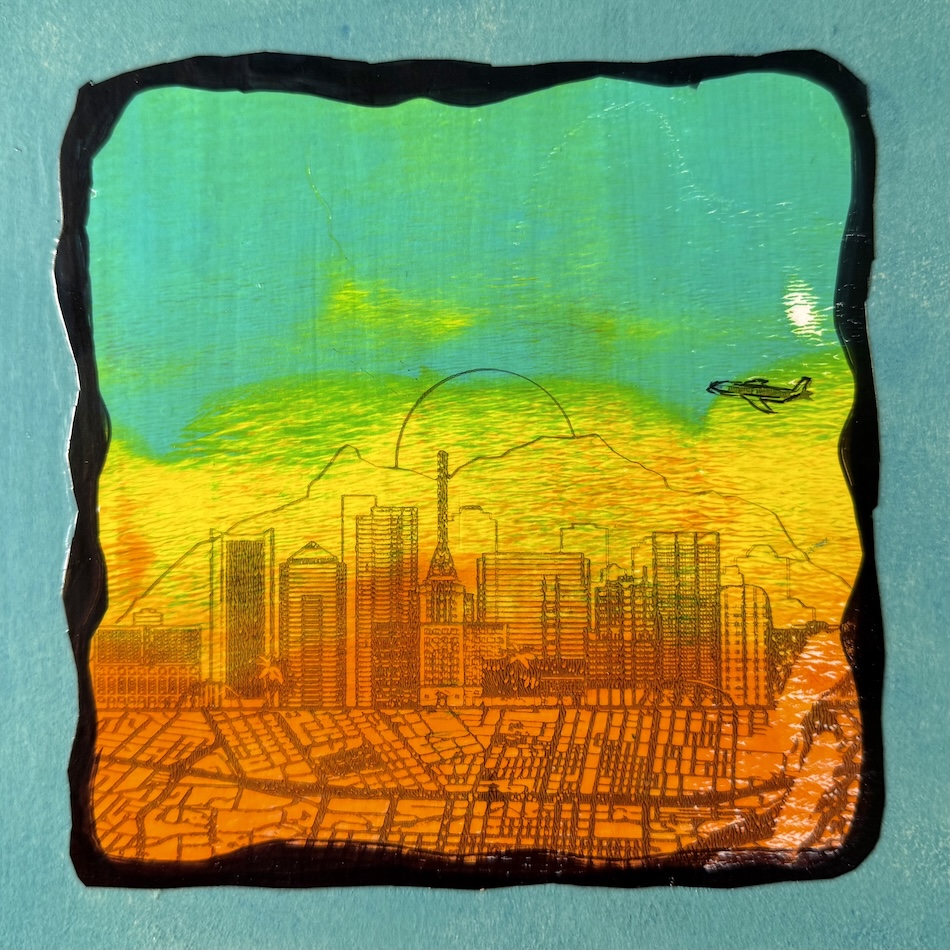
From my earlier “Viareggio” post: Several years ago I began following a handful of Instagram accounts that feature aerial views of various places around the world. It’s a perfect way to view scenery from above without the requirement of passports and boarding planes. Not only does one get a unique perspective of our planet from satellite views, but many features of large areas — whether natural or mad-made — offer unique and patterns and color palettes, as well as inspiration for artwork.
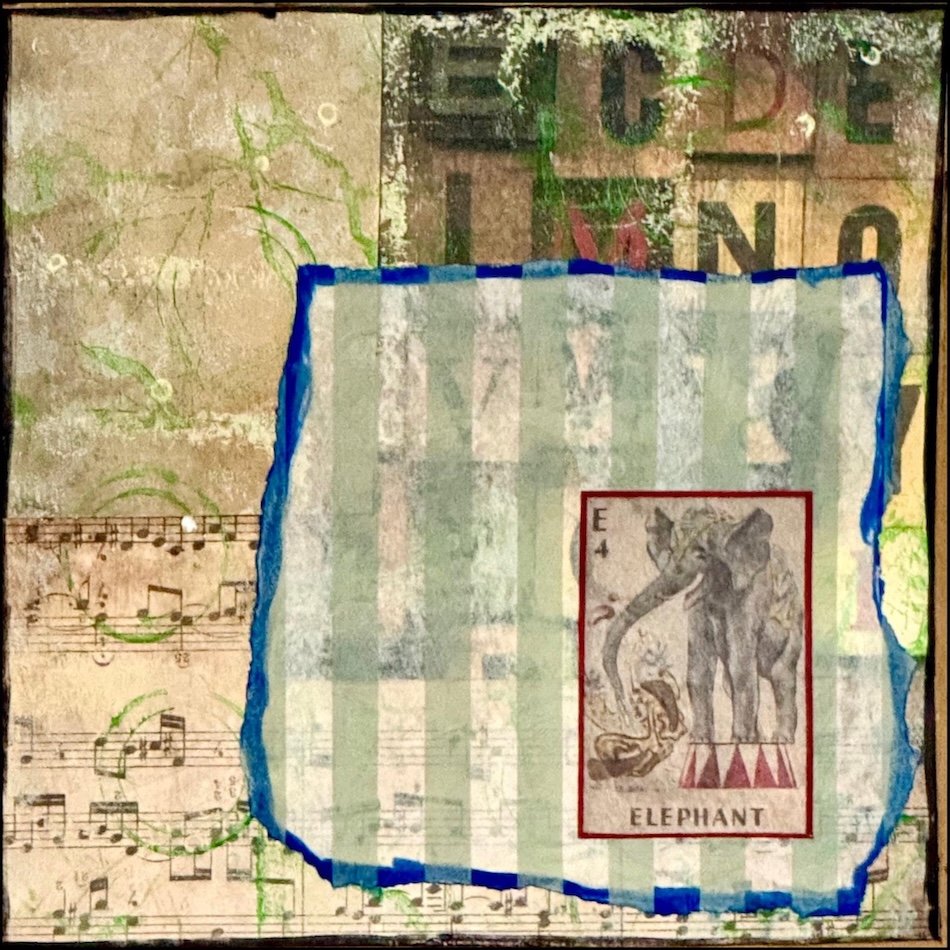
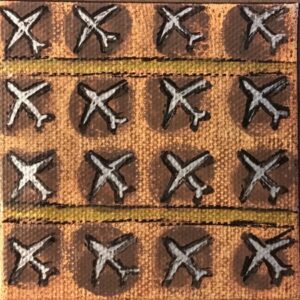
Now back to this post 😃 Another throwback piece, “Boneyard” is another project I completed back in 2016, a few months before “Viareggio.”
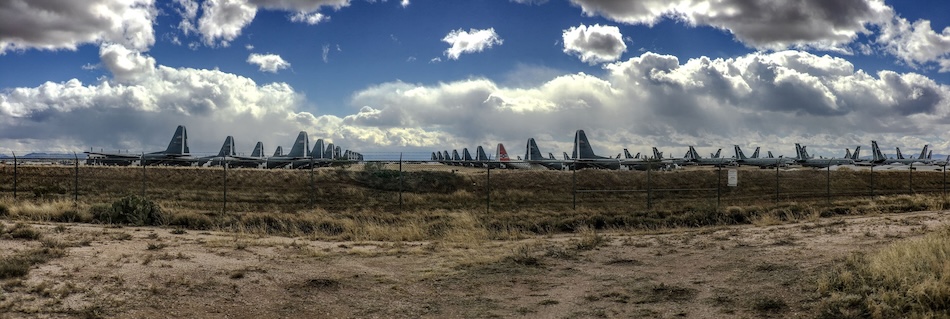
I’ve always joked that I’m 3% aviation nerd. I always had a fascination with planes for as long as I could remember, even prior a kindergarten field trip to the airport where we got to sit on a plane. This piece was inspired another aerial photo posted on Daily Overview. It had been taken over the airplane boneyard at Davis-Monthan AFB near Tucson, AZ.
This piece did not stay with me for very long, as it took off and landed into a friend’s private collection who at the time lived on the west coast and has since moved to the east coast. I dare say it is a well-traveled piece!
Davis-Monthan Air Force Base’s role in the storage of military aircraft began after World War II, and continues today. It has evolved into “the largest aircraft boneyard in the world”. With the area’s low humidity in the 10%-20% range, meager rainfall of 11″ annually, hard alkaline soil, and high altitude of 2,550 feet allowing the aircraft to be naturally preserved for cannibalization or possible reuse, Davis-Monthan is the logical choice for a major storage facility. The geology of the desert allows aircraft to be moved around without having to pave the storage areas. By May of 1946, more than 600 B-29 Superfortresses and 200 C-47 Skytrains had been moved to Davis-Monthan. In addition, about 30 other aircraft were stored at Davis-Monthan that were destined for museums, including the “Enola Gay” and “Bockscar”.